
Russian Orthodox Monastery of the Holy Trinity
Río Danubio 42, Cuauhtémoc, 06500 Ciudad de México, CDMX, Mexico
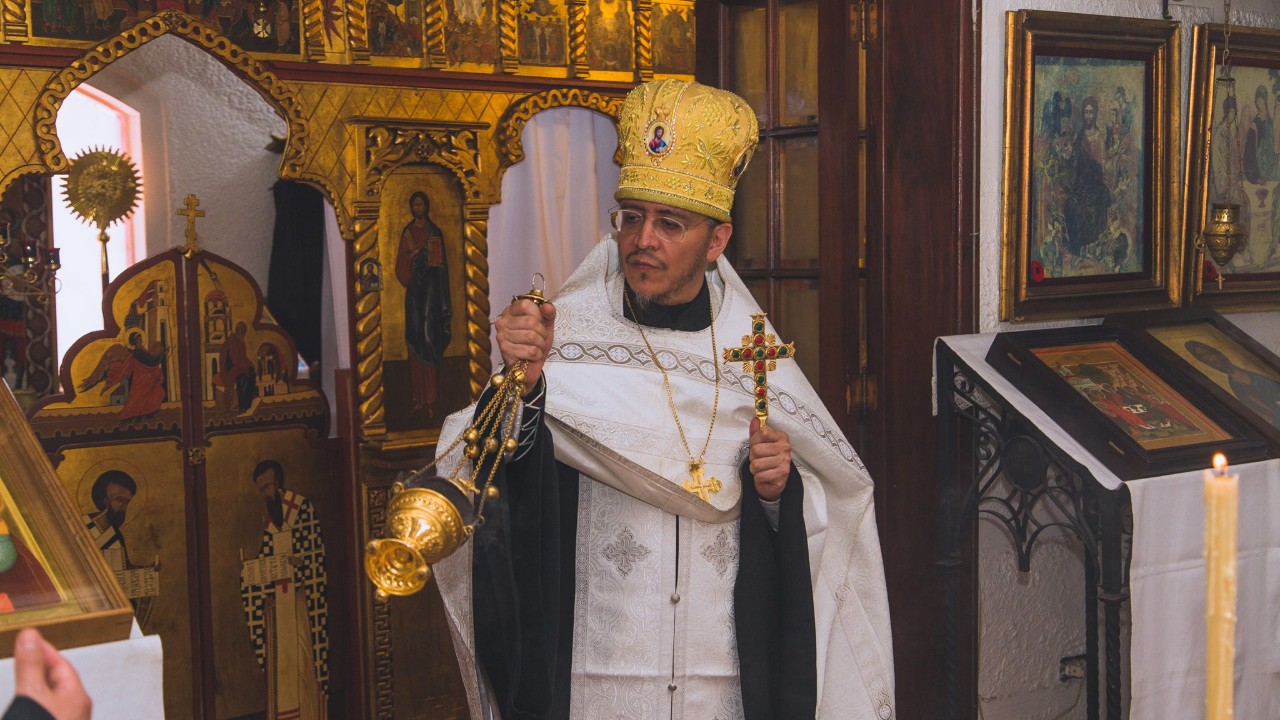
On behalf of His Eminence Cyril, Archbishop of San Francisco and Western America of the Russian Orthodox Church Outside of Russia, with the blessing of the ever-remembered Metropolitan Laurus, First Hierarch of the ROCOR, and under the patronage of the stauropegic monastery in Jordanville (New York) on January 7, 2007, on the Feast of the Nativity of Christ, the Holy Trinity monastery (later monastery) of the city of Mexico opened its doors to Orthodox believers living in Mexico from the countries of the former Soviet Union by providing them with spiritual nourishment for the first time. The schema-hieromonk Nectarius (later schema-archimandrite), who later also became dean of Mexico, was appointed rector for this purpose. Schema-Archimandrite Nektarios (Hadji-Petropoulos), founder and abbot Schema-Archimandrite Nektary, the current confessor of the Holy Trinity Monastery, is of Greek and Georgian origin. The history of his family is closely connected with the lands located between the Black and Caspian Seas. His childhood was spent in Sukhumi, Istanbul and Tehran. At the age of 12, he moved with his father's family to New York, from where he was invited to Mexico City by his spiritual father, Bishop Paul of Nazia of the Patriarchate of Constantinople. Although the idea of founding the monastery belonged to Bishop Paul, who performed the monastic vows of Schemonk Nectarius in 1982, nevertheless, it was not realized due to the murder of the Bishop by a Catholic of far-right views upon leaving the Greek Orthodox Council in the city of Mexico in 1984. For many years after this tragic event, Father Nectarius continued his faithful ministry in the Greek Council of the city of Mexico. In 1996, Schemamonk Nectarius, together with two novices, was preparing to found a monastery in Argentina, but during this period Mexico received the status of a metropolis, and the appointed Greek metropolitan asked Father Nectarius to stay, and therefore the plans for the founding of the monastery were disrupted. In 1998, the schemamonk Nektary entered the Jerusalem Patriarchate in America, with the firm intention of founding a monastery using the Julian calendar and operating in the strictest monastic traditions. However, the only thing he could do there – was serve in any Palestinian parish community. Trying to understand the Will of God, he, being a simple monk, wandered for a long time with several monks, visiting dozens of monasteries in the Holy Land, Greece and the Balkans, and finally asked to be accepted into the Russian Orthodox Church Abroad. In 2005, he entered the Holy Trinity Monastery in Jordanville, where after some time he was ordained by the ever-remembered Metropolitan Laurus, first as a hierodeacon and later as a hieromonk. After that, with the blessing of Metropolitan Laurus, in January 2007 he returned to Mexico to celebrate the Nativity of Christ and officially open on this day the doors of the Holy Trinity monastery for Russian-speaking Orthodox believers living in this country. In September 2008, Metropolitan Hilarion, First Hierarch of the ROCOR in the Cathedral of All Who Sorrow Joy in San Francisco, Schema-Hieromonk Nektary was elevated to the rank of abbot, and on January 17, 2012, Archbishop of San Francisco and Western America Kirill in the Holy Trinity Monastery itself in the city of Mexico – to the rank of archimandrite. Schema-Archimandrite Nektary holds several academic degrees in theology, medicine, and history. Speaks six languages. Monastery and inhabitantsThere are 5 monks in the Holy Trinity Monastery, all of them of different ethnic origins, not a single Russian. All have a university degree and all speak several languages. The monastery also has two hermitages located in Mexico. Daily services are held according to the liturgical cycle of an ordinary Russian monastery and are adapted to the schedule of activities of the monks. Services are held in Church Slavonic, sometimes using Spanish. Among the parishioners there are Mexicans who have converted to the Orthodox faith, but the main goal of the monastery is not to convert local residents to Orthodoxy, but to care for Orthodox believers of Slavic origin living in Mexico.
Service Schedule
Upcoming Events
Loading events...
Good Works
Loading good works…
Fundraisers
Loading fundraisers…